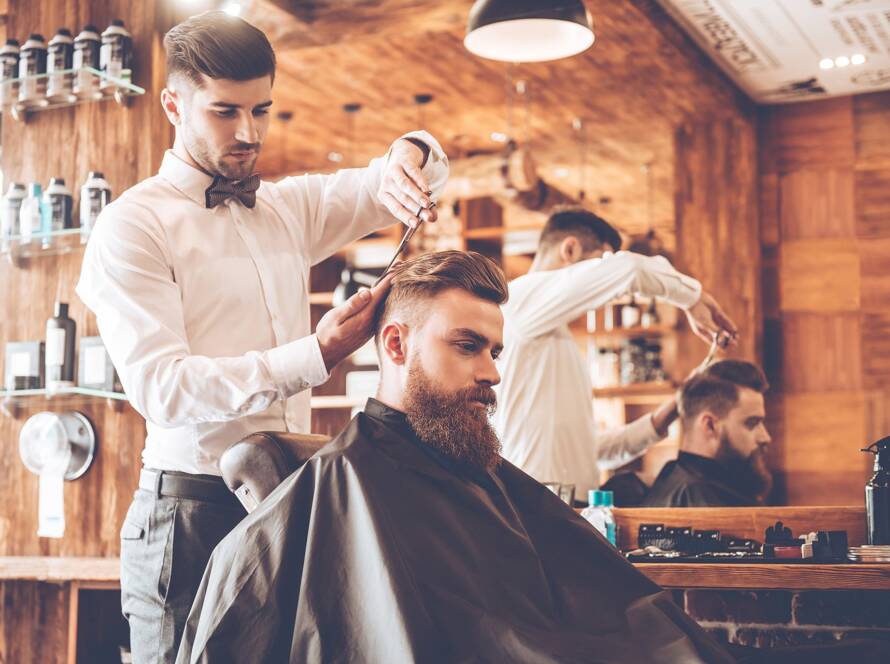
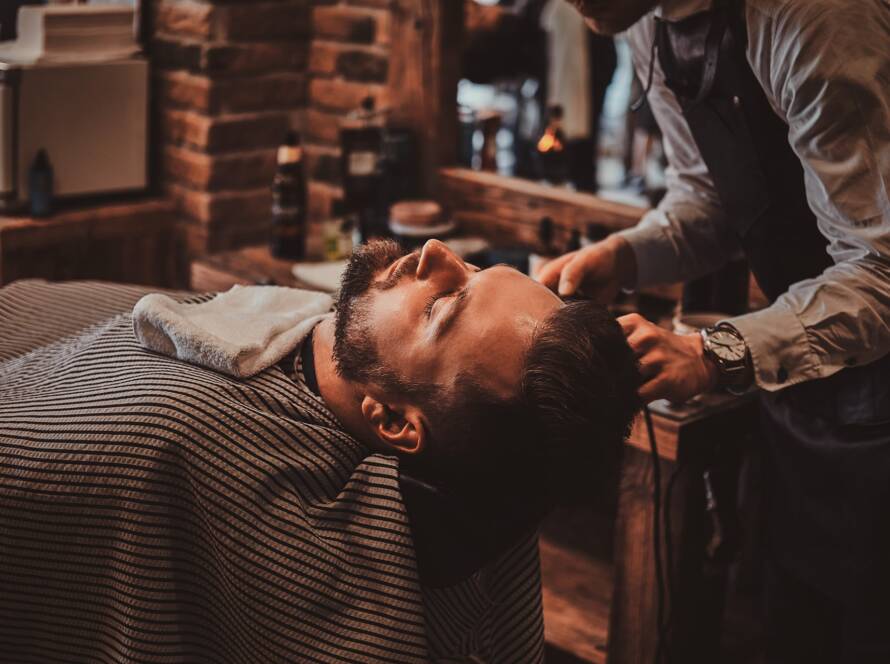
A great beard does not happen accidentally. The men whose facial hair consistently looks intentional, healthy, and well-maintained are not blessed with better genetics — they have a better routine. At Prime Barbershop in Chelsea, we work with beards of every length, texture, and style every single day, and the difference between a beard that commands attention and one that simply exists is almost always the same thing: consistent, informed care.
Prime Barbershop
This guide covers everything you need to know about beard grooming — from the basics of washing and conditioning to the professional services that no home routine can replicate. Whether you are growing your first beard, maintaining one you have had for years, or trying to fix a beard that has never quite looked the way you imagined, this is the resource to start with.
Part One: Understanding Your Beard
Beard Hair Is Different From Head Hair
This sounds obvious, but its implications are frequently ignored. Beard hair is androgen-dependent — it grows in response to testosterone and is structurally coarser, drier, and more wiry than scalp hair. It grows in multiple directions simultaneously, changes direction at the jaw and chin, and is significantly more prone to causing skin problems — particularly ingrown hairs and irritation — when not properly maintained.
The skin beneath the beard is also different from the skin on the rest of your face. It is more prone to dryness and flaking because the beard itself absorbs the skin’s natural oils before they can properly moisturize the surface. This is why beard itch — particularly in the early weeks of growth — is almost universal, and why it is a skin problem as much as a hair problem.
Beard Growth Patterns and What They Mean
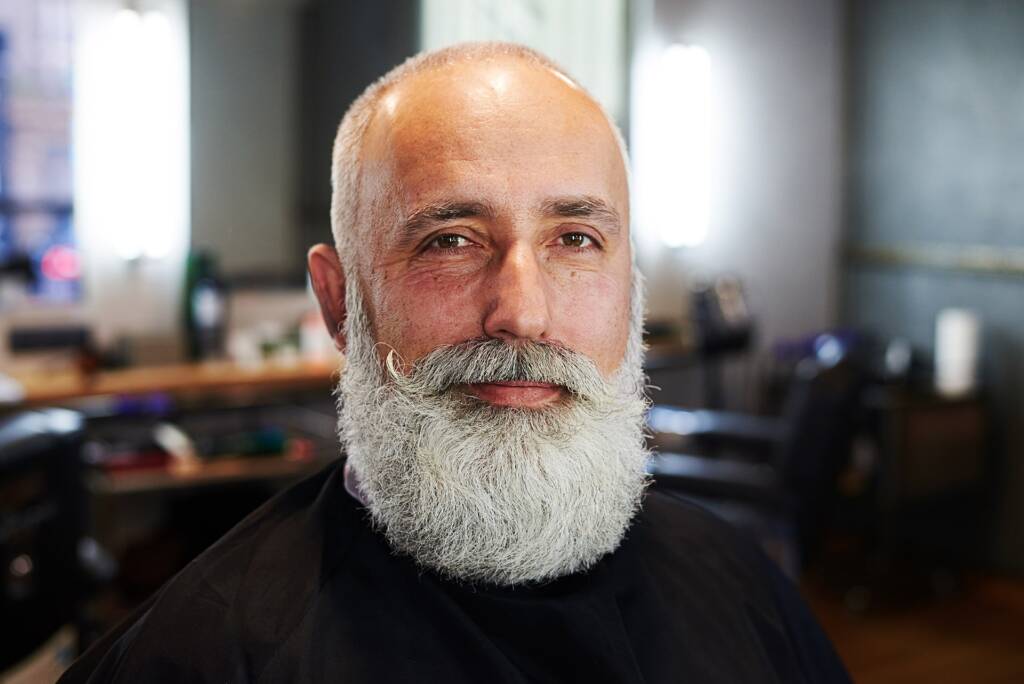
Every beard grows in a unique pattern determined by the direction of individual follicles, which varies significantly across different areas of the face. Most men have growth patterns that include multiple directions on the neck, a natural whorl somewhere near the chin, and areas of finer or sparser growth — typically the upper cheeks — that require different handling than the denser zones.
Understanding your own growth pattern is foundational to good beard grooming. It determines how you should be trimming (always with the grain for maintenance, against for closeness on flat areas), where your natural beard shape wants to sit, and which areas of your beard will need more attention and product than others. If you have never paid attention to your growth pattern, the next time you wash your beard, watch the direction the water pulls the hair — that is your grain.
Part Two: The Daily Routine
Washing Your Beard
The single most common beard care mistake is washing the beard with regular shampoo or, worse, bar soap. Both strip the beard and the underlying skin of natural oils far more aggressively than dedicated beard products, leading directly to the dryness, brittleness, and flaking that many men attribute to their beard type when it is actually a product problem.
Use a dedicated beard wash or a mild, sulfate-free cleanser two to three times per week. Daily washing is unnecessary for most men and counterproductive — the natural oils your skin produces are exactly what your beard needs, and stripping them daily forces your skin into an overproduction cycle. If you shower daily, let warm water run through the beard without soap on non-wash days. It rinses debris without stripping oils.
Beard Oil: The Non-Negotiable
If there is one product every bearded man should own and use without exception, it is beard oil. Applied daily to a clean, slightly damp beard — the dampness opens the hair shaft and improves absorption significantly — beard oil moisturizes both the hair and the skin beneath, reduces itchiness almost immediately, adds a healthy natural sheen, and makes the beard substantially easier to comb and style.
The right quantity depends on beard length. For shorter beards under an inch, two to three drops worked between your palms and patted into the beard is sufficient. For longer beards, four to six drops distributed in sections ensures even coverage. Apply from skin outward, working the oil to the roots first and then distributing through the lengths. Do this every morning before any other styling.
Beard Balm and Wax: When You Need More Control
Beard oil handles moisture. Beard balm adds a light hold element — typically from beeswax or shea butter — that helps tame flyaways, shape the beard throughout the day, and add slightly more definition to the style. Balm is particularly useful for beards over two inches in length that tend to drift or lose shape during the day, and for beards with a wiry or coarse texture that oil alone does not fully tame.
Beard wax is the strongest hold option, used primarily for styling specific areas — most commonly the mustache, where a firm hold keeps the hair away from the upper lip and maintains a deliberate shape. If you have a longer mustache or any style that requires a held shape rather than simply looking groomed, a small amount of wax applied with fingertips to the dry mustache is the standard professional technique.
Combing and Brushing
A beard comb or brush used daily serves multiple purposes: it detangles, distributes product evenly, trains the hair to grow in a consistent direction over time, and stimulates blood flow to the follicles. For shorter beards, a fine-tooth comb or a stiff boar bristle brush works best. For longer beards, a wide-tooth comb prevents breakage by working through tangles without force.
Comb or brush the beard after applying oil, working in the direction of growth. For the mustache, comb outward from the center and then downward. For the neck, comb downward. For the cheeks, follow the natural direction of growth. The five minutes this takes each morning is the single most visible difference between a beard that looks maintained and one that simply looks long.
Part Three: Trimming and Shaping at Home
The Tools You Actually Need
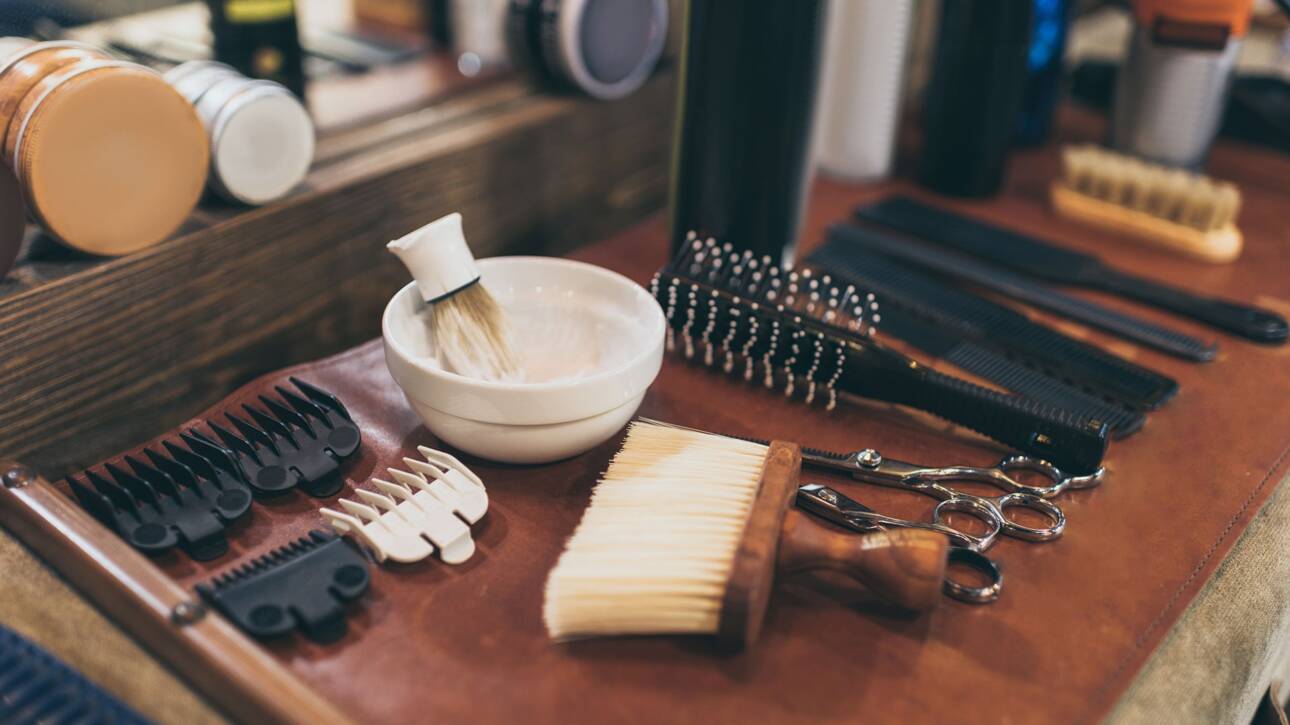
You do not need an extensive collection of grooming tools. A quality trimmer with adjustable guard lengths handles the majority of home beard maintenance. A pair of barber scissors for detail work on the mustache and any stray hairs. A fine-tooth comb for guided trimming — running the comb through the beard and trimming the hair that extends beyond the teeth is the most accurate home trimming technique available. And a good hand mirror for seeing the sides and back clearly, which a standard bathroom mirror makes nearly impossible.
Maintaining Length at Home
For length maintenance between professional visits, always trim on a dry, combed-out beard. Wet hair appears longer than it is when dry, which means trimming wet almost always results in removing more length than intended. Set your trimmer one guard size longer than you think you need on the first pass — you can always take more off, you cannot put it back.
Trim in sections: cheeks, then chin, then neck, then mustache last. The mustache requires the most precision and the most patient hand, so doing it when you are fresh rather than at the end of the process produces better results. Move the trimmer in the direction of hair growth for the cleanest cut on each section.
The Neckline: The Most Important Line You Draw
The neckline is where most self-groomed beards go wrong. Set it too high and the beard looks like it is sitting on your face rather than growing from your jaw. Set it too low and the neck looks unkempt regardless of how well-maintained the rest of the beard is. Get it right, and the entire beard looks intentional even at four weeks of growth.
The correct neckline position for most men is approximately two finger-widths above the Adam’s apple, following the natural curve of the jaw downward from both sides to meet at that point. It should curve slightly — not a flat horizontal line, which looks unnatural on most neck shapes. If you are unsure where yours should sit, have it set professionally first and then maintain that line at home. A professional neckline is infinitely easier to maintain than to establish from scratch.
The Cheek Line
The cheek line — the upper boundary of the beard on the cheeks — is significantly more forgiving than the neckline and in most cases should be left as close to natural as possible. Shaving the cheek line dramatically higher than where the hair naturally grows creates a look that can seem overly groomed or dated. The exception is men with very high or uneven natural cheek growth, where a minor cleanup of stray hairs above the main density line is appropriate.
Part Four: Professional Beard Services at Prime
Beard Trim — The Maintenance Standard
Our Beard Trim at $19 is the professional equivalent of the home maintenance routine described above — executed with barbering tools, barbering precision, and the kind of three-dimensional perspective on your face that a bathroom mirror simply does not provide. We address length, shape, bulk distribution, neckline definition, and cheek line cleanup in a single service that takes approximately twenty minutes.
For most bearded clients, a professional beard trim every three to four weeks alongside their regular haircut appointment is the cadence that keeps the beard looking consistently maintained. The Haircut and Beard Trim combination at $60 is our most popular grooming package precisely because the two services together produce a result that is greater than the sum of its parts — a haircut that is finished by a shaped beard, a beard that is framed by a fresh cut.
Beard Shaping — For Beards That Need Structure
The Beard Shaping service at $30 goes deeper than a trim. It is the right choice for beards that have grown beyond their natural structure and need to be redesigned rather than simply maintained, for men who are growing a beard for the first time and want to establish the right shape from the beginning, and for beards that have a specific style in mind — a defined cheek line, a sculpted chin, a particular silhouette — that requires careful planning and execution rather than straightforward cleanup.
Beard shaping at Prime Barbershop begins with a consultation about your face shape, the density and growth pattern of your beard, and what you are trying to achieve. The right beard shape for your face is not always the one you see on someone else — a barber who understands facial geometry will guide you toward a shape that works with your specific proportions rather than against them.
Mustache Trim and Goatee Trim
For men who wear a mustache as part of their beard or as a standalone style, our Mustache Trim at $10 delivers the precision line work and bulk management that keeps the mustache looking deliberate rather than accidental. A well-trimmed mustache is one of the most impactful small details in men’s grooming — it is constantly in the center of your face and visible in every photograph and direct conversation.
The Goatee Trim at $10 addresses the specific shaping needs of the goatee — the clean lines at the edges of the chin patch, the connection to or separation from the mustache, and the neckline below. Goatees have a particular geometry that requires sharp lines to look intentional, and those lines are significantly easier to maintain once they have been professionally established.
The Hot Towel Treatment and Royal Shave Connection
The grooming services at Prime Barbershop do not exist in isolation. For men who shave portions of their beard as part of their style — clean cheeks above the beard line, a shaved neck, or defined contours between the beard and the skin — the hot towel preparation technique used in our Royal Shave and Hot Towel Treatment services is directly applicable to beard grooming as well.
Hot towel preparation before any shaving adjacent to the beard softens the skin, opens the pores, and makes the straight razor significantly more effective and comfortable — producing edges next to the beard that are cleaner and less irritating than those produced by cold shaving. Clients who combine a beard trim with a hot towel edge cleanup report a noticeably better result than either service alone. Our Hot Towel Treatment is available at $15 as a standalone service or as a preparation element within a broader grooming appointment.
Part Five: Beard Problems and How to Fix Them
Beard Itch
Almost universal in the first two to four weeks of growth and caused primarily by dry skin, not the beard hair itself. Daily beard oil application addresses the root cause within a week in most cases. If itching persists beyond the initial growth phase, a dedicated beard wash replacing whatever you have been using on the beard is usually the remaining fix.
Ingrown Hairs and Beard Bumps
Caused by hairs that curl back into the skin rather than growing outward — more common in coarse and coily beard textures. Exfoliating the skin beneath the beard twice a week with a gentle facial scrub helps prevent the buildup of dead skin that traps hairs. Keeping the beard oiled and combed trains the hair to grow outward. For persistent ingrowns, a professional beard trim that addresses the hair length and direction in problem areas is more effective than any product.
Patchiness
Patches in beard growth are genetic and cannot be fundamentally changed by products regardless of what the marketing claims. What can be changed is how you work with the growth you have. Longer beard length often covers patches more effectively than shorter lengths, as surrounding hair fills in sparse areas. A beard shaping appointment at Prime Barbershop specifically addresses the challenge of designing a beard style that works with your actual growth pattern rather than against it.
A Beard That Loses Shape During the Day
Usually a product issue — insufficient hold or the wrong product for the beard texture. Add beard balm after oil in the morning routine and comb or brush the beard into shape after the balm is applied. For particularly unruly beards, a light hold wax on the mustache and chin area adds lasting structure without stiffness.
Building Your Beard Grooming Calendar
The most effective beard care routine is one built around a consistent professional cadence. Here is the framework we recommend to bearded clients at Prime:
– Daily: Beard oil after washing or showering. Comb or brush into shape. Wax on mustache if needed.
– Two to three times weekly: Dedicated beard wash. Beard balm for additional hold and conditioning.
– Every three to four weeks: Professional Beard Trim at Prime, ideally alongside your haircut appointment.
– Every eight to twelve weeks, or when significant reshaping is needed: Beard Shaping service at Prime.
– As needed: Mustache Trim and Goatee Trim for precision detail work.
The men whose beards consistently look the best are not those with the most elaborate routines. They are the ones who do a small number of things consistently — daily oil, regular professional maintenance, and enough product knowledge to manage their specific beard between visits. Build the habit first. Refine the details from there.
Prime Barbershop is located in Chelsea, Manhattan. Beard services are available as standalone appointments or in combination with any haircut service. Book online at primebarbershop.com or through Booksy. Walk-ins are welcome based on availability.